# Liveness Proof
### What is proof of life?[](https://doc.facesign.in/docs/Recursos/Prova%20de%20vida#oque-%C3%A9-prova-de-vida)
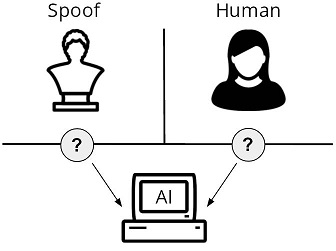
**Face liveness Detection** is a type of assessment that will tell whether the transmitted image of a person's face is real or just a representation, such as a photo, video, or mask. In other words, the system detects whether there is actually a living person in front of the camera.
In digital environments, it is difficult to require physical signature of documents or biometric reading in authentication and identification processes. It is because of this need that this technology becomes necessary.
### How does the assessment work?[](https://doc.facesign.in/docs/Recursos/Prova%20de%20vida#como-a-avalia%C3%A7%C3%A3o-funciona)
A 2D photo is a type of biometric data that is stored in your computer's cache, which means that having a copy of this photo makes the user more vulnerable to fraud? Not if your accounts are protected with 3D liveness detection (**liveness**), because the photo will not fool the AI, in fact, not even a video, a copy of your driver's license, passport, fingerprint or iris. For authentication to work it is necessary that the user is present at the moment they access their accounts, which means that your biometric data does not need to be a "secret".
### 2D vs 3D matching[](https://doc.facesign.in/docs/Recursos/Prova%20de%20vida#correspond%C3%AAncia-2d-vs-3d)
2D matching will never have the accuracy required for true unsupervised identity verification and authentication. There is too much variability in how the same 3D human face appears when flattened to 2D at different image capture distances. That variability creates significant overlapping similarity between 2D features of different human beings and confuses 2D algorithms.
***
### Support and Contact
For technical support or questions, use the FaceSign Admin Portal or contact our team through the official channels.